the _______ is composed of lakes rivers and oceans
Faroe Islands
The Faroes are an archipelago in the North Atlantic Ocean that forms a self-governing autonomous territory inside the Kingdom of Denmark. The archipelago is located approximately 655 kilometer from the coast of Northern Europe. The Faroe Island group is positioned 'tween the North Atlantic Ocean and the Norwegian Sea and is situated exactly midway betwixt the Nordic nations of the Kingdom of Norway and Iceland. The Faroe Islands are bordered away the Northern Isles archipelago and the Outer Western Islands Island chain of Scotland.
Geography
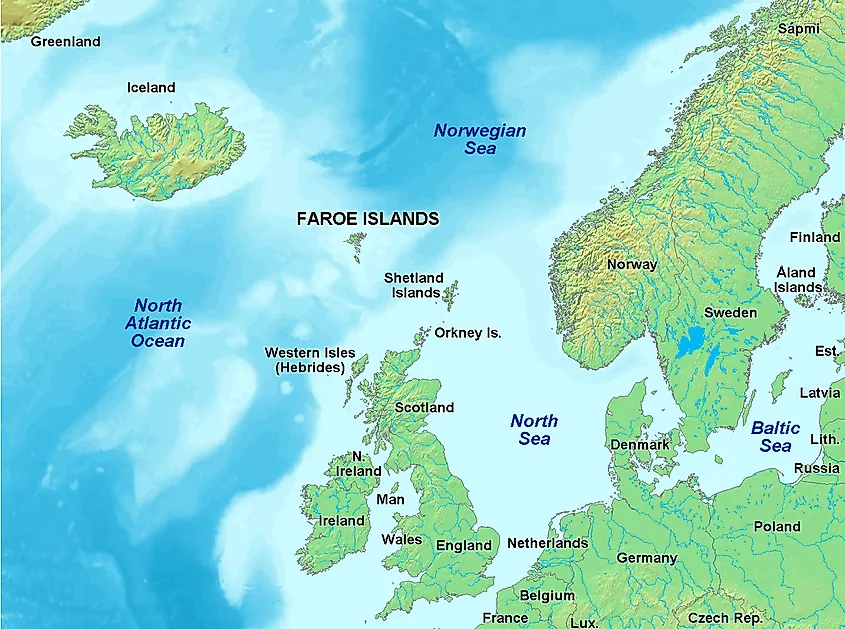
Cover a tally area of about 1,399 km2, the Faroe Islands archipelago comprises 18 principal sum islands on with many teentsy stony islands and islets. Some of the major islands of the archipelago include Borðoy, Eysturoy, Sandoy, Streymoy, Suðuroy, Svínoy, and Vágar. Out of the 18 primary islands of the archipelago, 17 of these islands are inhabited while only the small Lítla Dímun island is uninhabited.
Covering an area of 373 km2, the oblong-shaped Streymoy Island is the biggest and the most populous in the Faroes archipelago. Settled on the grey edge of the Streymoy island is Tórshavn, the capital and main port of the Faeroes archipelago. Eysturoy is the second-largest island happening the archipelago that covers an area of about 286.3 km2. The islands are further administratively chambered into 29 municipalities that consist of more than 120 settlements.
The Faroe Islands have rugged and difficult terrain and are mainly composed of basaltic lava. On that point are few bittie elevated peaks and the highly concave coast of the islands features several fjords that are further lined aside numerous perpendicular cliffs. Located in the northern part of Eysturoy Island is Slættaratindur, which rises to an elevation of 882 m and is the highest point in the Faroe Island archipelago. In that respect are few small rivers and minor lakes in the Faroe Islands archipelago.
According to the Köppen clime classification, the Faroe Islands experiences a subpolar oceanic clime with meek winters and cool summers. The climate of the archipelago is strongly influenced by the warm Second Earl of Guilford Ocean Latest, which helps to hold bac the harbors on the island ice rink-free passim the twelvemonth. The islands besides face frequent obnubilate and rains, and strong winds muck up all over the archipelago throughout the year. The North Atlantic hurricanes occasionally strike the Faroe Islands during the summertime months.
Wildlife
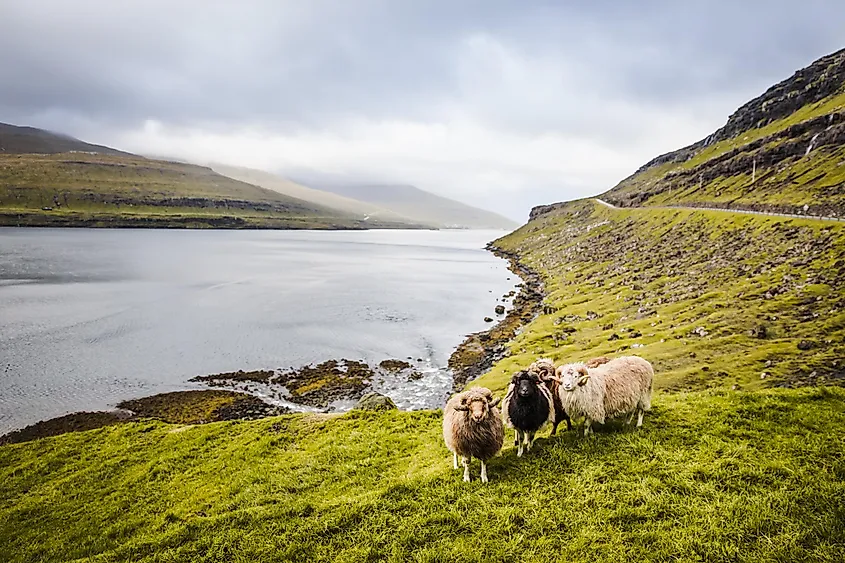
The botany of the Faroe Islands archipelago is dominated by grass, wildflowers, moss, arctic-alpine plants, and lichen. Attributable the strong westerly winds and frequent gales that are round-faced by the archipelago, the Faroes are more often than not treeless although a a few hardy trees have late been introduced in the sheltered plantations of the islands.
Numerous avian species are saved on the Faroes. These include the various species of seabirds, Sturnus vulgaris, common murre, common eider, Atlantic Ocean puffins, Eurasian wren, and the Cepphus grylle. A few terrestrial animals are found here including the mountain hare, Rattus norvegicus, planetary hous mouse, Faroe sheep, Faroe cow, and Faroe pony.
Several cetacean species are recorded in the amnionic fluid surrounding the Faroe Islands. Grey seals and long-finned pilot whales are also found here. Killer whales are frequently discovered close to the Faroe Islands.
Brief History
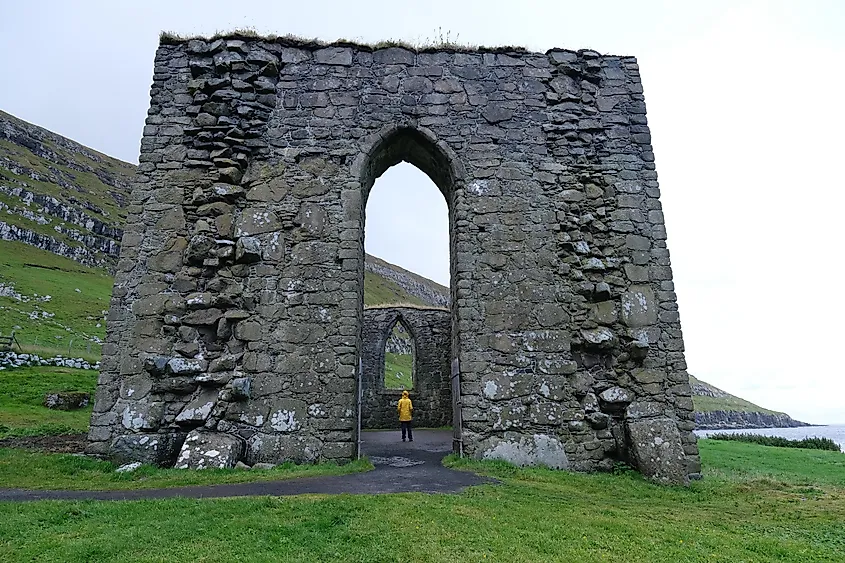
The name of the Faeroes first appeared as Føroyar in the Faroese language. The Danish pastry name for the Faroe Islands, Færøerne, is a contemplation of Old Norse terms that promising base "Sheep Islands." The Faeroe Islands were to begin with inhabited past the Irish monks and then by the Vikings in the early 9th century. The Faroe Islands became a part of the Inheritable Realm of Norway in 1035 and 1380 along with the rest of Norway, they were taken ended by Kingdom of Denmark. Nether the Treaty of Kiel in 1814, the Danish pastry gained complete authority over the Faroe Islands along with Greenland and Iceland. The Faroe Islands became an autonomous country within the Kingdom of Denmark in 1948.
the _______ is composed of lakes rivers and oceans
Source: https://www.worldatlas.com/islands/faroe-islands.html

Posting Komentar untuk "the _______ is composed of lakes rivers and oceans"